
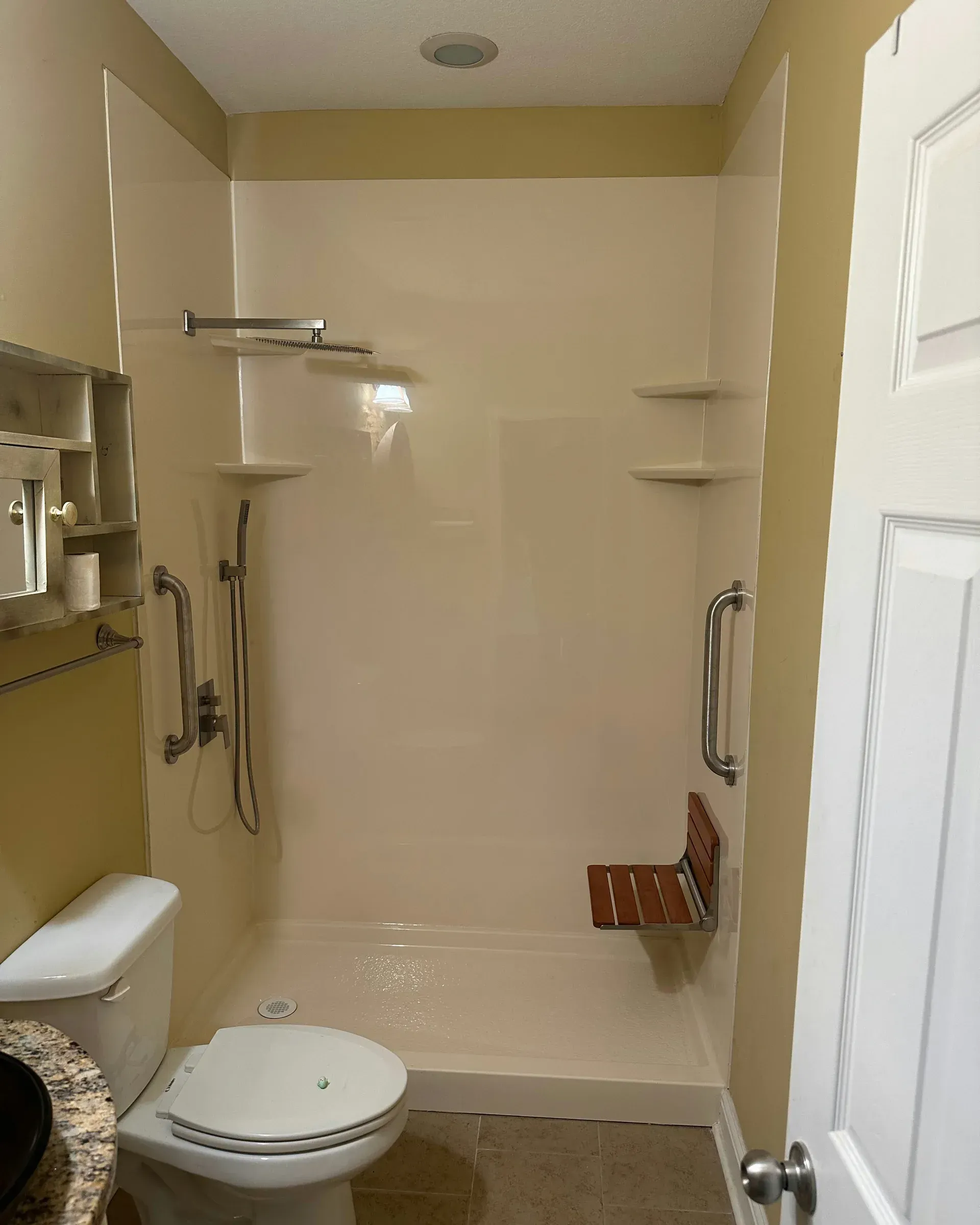
Bathrooms Modified for Independent Use
ADA Bathroom Modifications in Montgomery for homeowners managing mobility challenges or planning to age in place
Navigating a standard bathroom becomes difficult when balance declines, wheelchair use begins, or strength decreases. Narrow doorways block wheelchair passage, standard toilets sit too low for safe transfers, and traditional showers require stepping over edges that increase fall risk. Bath Doctor of Alabama modifies bathrooms by widening entry points, installing grab bars at transfer locations, and replacing fixtures with accessible alternatives. These changes allow homeowners to maintain independence without requiring assistance for basic tasks.
Modifications address specific barriers: doorways narrower than 32 inches prevent wheelchair or walker entry, toilets at standard 15-inch height require excessive bending, and bathtubs without seating force users to lower themselves to the floor. The modification process involves measuring existing clearances, identifying structural supports for grab bar installation, and selecting fixtures designed for easier use. Work is tailored to individual mobility patterns rather than applying generic standards.
Schedule an accessibility consultation to identify modifications that address your specific mobility limitations.
How Accessibility Modifications Improve Daily Function
Bathroom modification begins with evaluating doorway width, floor clearances, and fixture heights against the homeowner's current and anticipated mobility needs. Grab bars are anchored into wood blocking installed behind drywall, not just surface-mounted into tile. Toilet heights are raised using comfort-height models or riser attachments, and sinks are wall-mounted or paired with open-front vanities to allow wheelchair approach. Shower entry is lowered or eliminated with roll-in bases that sit flush with the floor.
Once modifications are complete, doorways allow passage without maneuvering around tight corners, grab bars provide stable support during transfers, and shower controls sit within reach from a seated position. Toilets require less leg strength to stand from, and sinks allow wheelchair users to roll underneath rather than reaching across a cabinet. Flooring transitions are leveled to prevent tripping, and lighting is increased to improve visibility during nighttime bathroom use.
Modifications focus on removing physical barriers but do not guarantee specific health outcomes or eliminate all fall risks. The goal is to reduce reliance on assistance for routine bathroom tasks while maintaining safety during transfers and movement.
What Property Owners Usually Ask
Homeowners often ask about specific features, structural requirements, and whether modifications affect resale value.
What grab bar placement works best for toilet transfers?
Grab bars are typically installed on the side wall 33 to 36 inches from the floor and on the rear wall behind the toilet. Placement depends on whether the user transfers from the left or right side and whether a wheelchair or walker is used.
How much clearance does a wheelchair-accessible bathroom require?
A clear floor space of at least 60 inches in diameter allows a wheelchair to turn completely. This often requires removing vanities or relocating fixtures to open the center of the room.
When do doorways need widening versus using offset hinges?
Standard doorways are 24 to 28 inches wide, but wheelchair passage requires 32 inches minimum. Offset hinges can add two inches of clearance without reframing, but wider wheelchairs or walkers still need full doorway expansion.
What shower features improve accessibility beyond low thresholds?
Built-in or fold-down seating, handheld showerheads with slide bars, and thermostatic valves that prevent scalding all improve safety. In Montgomery's humid climate, slip-resistant flooring is especially important since moisture lingers longer.
How do modifications affect home resale value?
Accessibility features appeal to aging buyers and multigenerational households, which are growing segments in Montgomery. Features like comfort-height toilets and curbless showers are increasingly standard even in non-accessible remodels.
Bath Doctor of Alabama provides bathroom modifications designed to reduce physical barriers and support independent living. Contact us to discuss specific accessibility needs and review modification options for your bathroom layout.